



Choosing the right welding automation equipment affects productivity, weld quality, safety, and cost. At CARMAC TECHNOLOGIES PVT. LTD, a leading welding manipulator manufacturer in India, that choice usually starts with one question: should the workpiece move, or should the welding head?
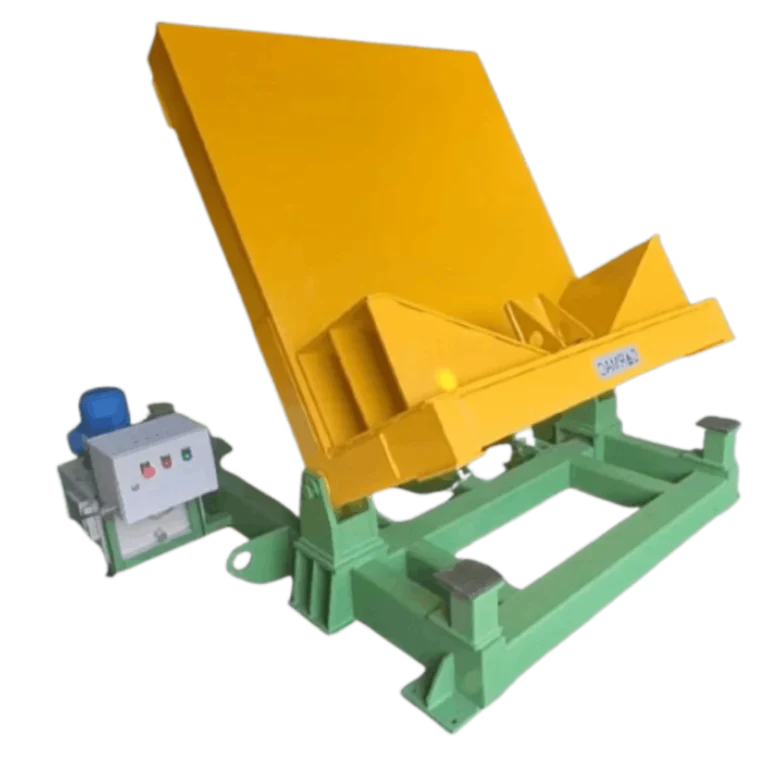
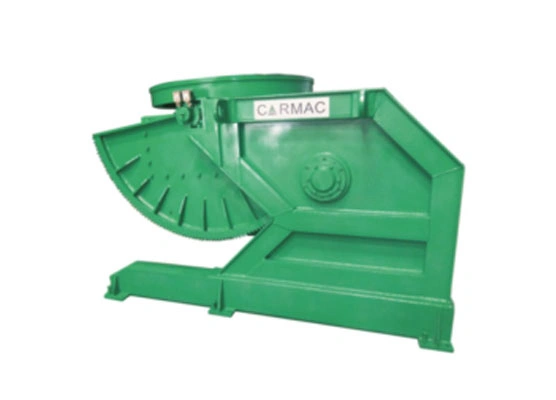
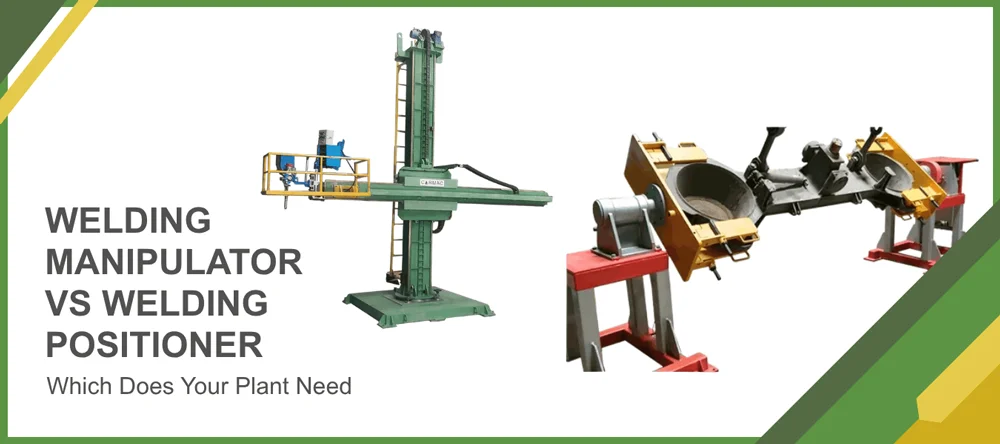
A welding positioner holds the workpiece and rotates or tilts it, so the joint sits in the best position for the welder or robot. A welding manipulator does the opposite. It moves the welding head while the workpiece stays put. In many large fabrication setups, the two work together.
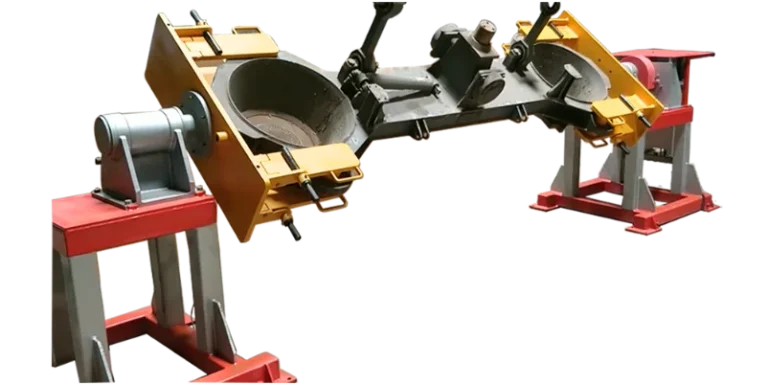
Common positioner configurations include:
- Turntable positioners
- Tilt-rotate positioners
- Headstock-tailstock positioners
- L-type positioners
- H-type positioners
- Dual-station positioners
The right heavy-duty positioner configuration depends on weight, centre of gravity, dimensions, weld locations, and required movement.
Common Welding Positioner Applications
Positioners are used where parts have welds on multiple faces or need controlled rotation. Typical applications include:
- Fabricated frames
- Flanges and brackets
- Structural components
- Machinery parts
- Automotive components
- Small and medium-sized vessels
- Pipe assemblies
- Robotic welding cells
- Multi-sided weldments
In each case, the positioner improves weld access, consistency, and handling efficiency.
What Is a Welding Manipulator?
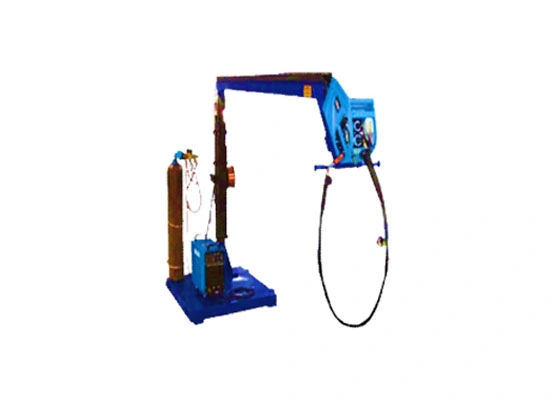
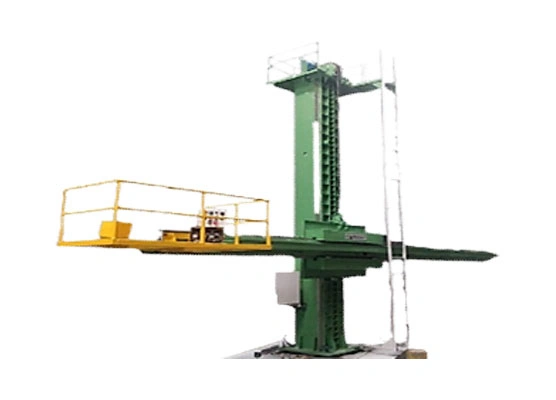
The most common type is the welding column and boom. A vertical column supports a horizontal boom that carries the welding head, such as a submerged arc welding (SAW), MIG, or TIG torch. The boom moves vertically and horizontally, and the column may rotate depending on the configuration. The heavy workpiece stays static while the manipulator extends the reach of the welding head.
While the term “manipulator” can broadly describe any automated handling equipment, fabricators and equipment buyers generally distinguish between a positioner (which moves the workpiece) and a manipulator (a column-and-boom system that moves the torch). This guide compares the two in that practical, operational sense.
Welding Manipulator vs Welding Positioner: The Main Difference
|
Feature |
Welding Positioner |
Welding Manipulator |
|
Primary function |
Moves / reorients workpiece |
Moves welding torch/head |
|
Main purpose |
Presents weld joint in an optimal position |
Provides torch reach and controlled travel |
|
Best suited for |
Small to medium weldments and multi-face parts |
Large, long, or stationary structures |
|
Typical movement |
Rotation and/or tilting |
Vertical, horizontal, and sometimes rotational travel |
|
Workpiece movement |
Yes |
Usually limited or none |
|
Typical applications |
Frames, brackets, assemblies, robotic cells |
Tanks, vessels, long seams, heavy fabrication |
|
Automation role |
Part positioning |
Torch positioning/travel |
Column and Boom Manipulator vs Positioner: Which Is Better?
Neither is better on its own. The right choice depends on your workpiece and welding process. The factors below show which one fits.
When to Use Welding Positioner vs Manipulator
Choose a positioner when:
- The part is irregular or multi-sided and needs different welding angles.
- Welds sit on multiple faces.
- The part can be safely mounted and rotated within the equipment’s rated capacity.
- The welding head already has enough reach.
- You run high-volume production, especially with robotic welding. Positioners integrate well with robots.
Choose a column-and-boom manipulator when:
- The part is too large to rotate conveniently.
- Seams are long, straight, or circumferential.
- The welding head needs significant horizontal or vertical travel.
- The job involves large vessels, tanks, or structural assemblies.
- The process is submerged arc welding, long-seam welding, or weld cladding, where controlled torch travel is critical.
Welding Positioner vs Turning Rolls
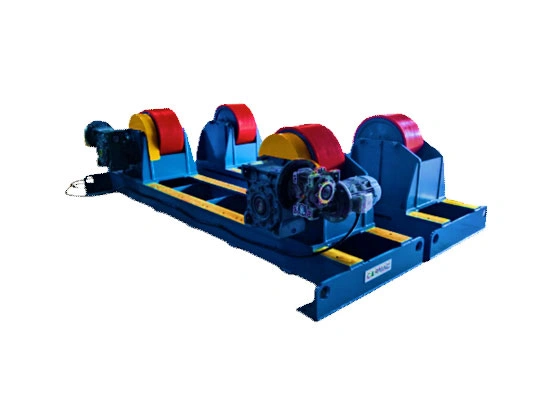
Turning rolls, also called welding rotators, rotate cylindrical parts on rollers. Positioners clamp and rotate or tilt the part.
Choose a positioner when:
- The component is irregular or non-cylindrical.
- Tilting is required.
- Multiple weld faces need to be presented.
- The component can be securely mounted to the fixture.
Choose turning rolls when:
- The workpiece is cylindrical.
- The component is long or large in diameter.
- Continuous circumferential rotation is required.
- Loading onto rollers is more practical than clamping.
Industrial Weld Positioner vs Column Boom
In heavy fabrication plants, the answer is often both. A common setup pairs a welding column and boom with a welding rotator. The rotator turns the vessel while the boom holds the welding head steady over the seam. This is how most circumferential welds on large pressure vessels and pipes are produced. As a material handling equipment manufacturer in India, CARMAC’s integrated solutions combine precision positioners with robust manipulators to deliver this dual-equipment advantage.
Welding Automation Equipment Selection Guide
Start with the application, not the machine name. Before purchasing, evaluate:
Workpiece information
- Maximum and minimum weight
- Overall dimensions
- Diameter, if cylindrical
- Centre of gravity
- Fixture requirements
- Loading and unloading method
Welding requirements
- Welding process
- Weld length
- Number of passes
- Required welding speed
- Weld orientation
- Torch travel requirements
- Seam tracking requirements
- Required positioning accuracy
Production requirements
- Daily production volume
- Cycle time
- Required arc-on time
- Operator involvement
- Future automation plans
- Available floor space
- Maintenance requirements
A positioner that looks adequate on weight alone may fail if the workpiece has a large offset from the rotation axis or needs high torque.
Welding Positioner vs Manipulator ROI
Purchase price should not be the only consideration. A better evaluation includes:
- Labour savings
- Increased arc-on time
- Reduced setup time
- Improved weld consistency
- Lower rework
- Reduced operator fatigue
- Improved material utilisation
- Production throughput
- Maintenance costs
- Equipment flexibility
A positioner often delivers strong ROI when manual repositioning slows production. A manipulator pays off when operators spend long hours controlling long welds or moving the torch across large components.
Conclusion
The right equipment depends on workpiece size, weight, shape, weld location, production volume, and automation goals. When evaluating welding manipulator vs positioner options, focus on your specific production constraints and long-term goals. For many plants, the best answer is a combination. CARMAC TECHNOLOGIES PVT. LTD can help evaluate welding automation solutions based on your specific production needs.
Frequently Asked Questions
A positioner moves the workpiece. A column-and-boom manipulator moves the welding head.
Use a positioner when the part needs rotation or reorientation. Use a manipulator when the welding head needs greater reach or controlled travel.
Tanks, pressure vessels, large pipes, long seams, and heavy structures.
Frames, brackets, machinery parts, pipe assemblies, vessels, robotic cells, and multi-sided weldments.
Positioners suit irregular or multi-sided components. Turning rolls (welding rotators) suit large cylindrical workpieces.
Weight, dimensions, centre of gravity, welding process, weld length, travel, production volume, floor space, and future automation.
Compare labour savings, setup time, productivity, consistency, rework, fatigue, maintenance, and flexibility.